


Penningmeester
Personal finance manager tracking spending and forecasting budgets automatically.
We build Express.js backends for teams scaling past prototypes. Expect clean middleware pipelines and deploy paths that won't surprise on-call engineers at 2am.

Express.js powers production at






The parts of Express.js we rely on for production builds.
16+ Years
Battle-Tested in Production
Created by TJ Holowaychuk and stewarded by the OpenJS Foundation. Older than most frameworks still in active use.
Top 10
npm Downloads
Express sits among the most-installed packages in the Node ecosystem, with deep tooling support across editors, CI, and observability platforms.
3B+
Monthly npm Downloads
Public engineering blogs at Netflix, PayPal, IBM, and Uber document Express handling traffic at internet scale.
50K+
Community Packages
Routing, body parsing, sessions, auth, validation, and observability ship as standalone packages you compose into a pipeline.
Express.js works best when the architecture matches the product constraints.
Express is the most popular Node.js web framework. It stays small on purpose: routing, middleware, and a request lifecycle, with everything else left to you and the libraries you pick.
You need a fast, minimal HTTP layer for REST APIs or microservices.
You want full control over middleware, routing, and request handling.
Your team already knows Node.js and prefers explicit code over framework conventions.
You need a stable, well-supported base that has been running production traffic for over a decade.
You want a heavily opinionated framework with built-in dependency injection (look at NestJS).
You are building a high-throughput API where every microsecond matters (Fastify is faster on benchmarks).
Your project is a server-rendered web app rather than an API service (Next.js or Remix fit better).
We will recommend the simpler path when it is the better fit.
Production outcomes we focus on during Express.js engagements.
Our routes are tangled and nobody wants to touch them
Express's request lifecycle is small enough to hold in your head. Middleware runs in the order you compose it, errors propagate predictably, and there is no hidden DI graph to debug at 2am.
We keep bolting on middleware that breaks other middleware
Auth, logging, validation, rate limiting, and tracing drop in as standalone packages. We build the pipeline once, document it, and the next engineer can read the entry file and understand the system.
The framework fights our database and transport choices
Postgres, Mongo, Redis, RabbitMQ, gRPC, REST, GraphQL, Kafka. Express does not care. We pick storage and transport based on the workload, not the framework's preferences.
We find production problems after the first incident
Graceful shutdown, request timeouts, structured logs, health checks, OpenTelemetry traces. Every API we ship has these in place before the first deploy, not bolted on after the first incident.
A practical comparison based on product fit, delivery speed, and long-term ownership.
Speed
Express.js
High
NestJS
High
Fastify
Very High
Koa
High
Scalability
Express.js
High
NestJS
High
Fastify
High
Koa
High
Community
Express.js
Massive
NestJS
Large
Fastify
Growing
Koa
Smaller
Convention
Express.js
Minimal
NestJS
Opinionated
Fastify
Plugin-based
Koa
Minimal
Ecosystem
Express.js
Rich
NestJS
Rich
Fastify
Developing
Koa
Smaller
Representative project patterns and outcomes.
Personal finance manager tracking spending and forecasting budgets automatically.
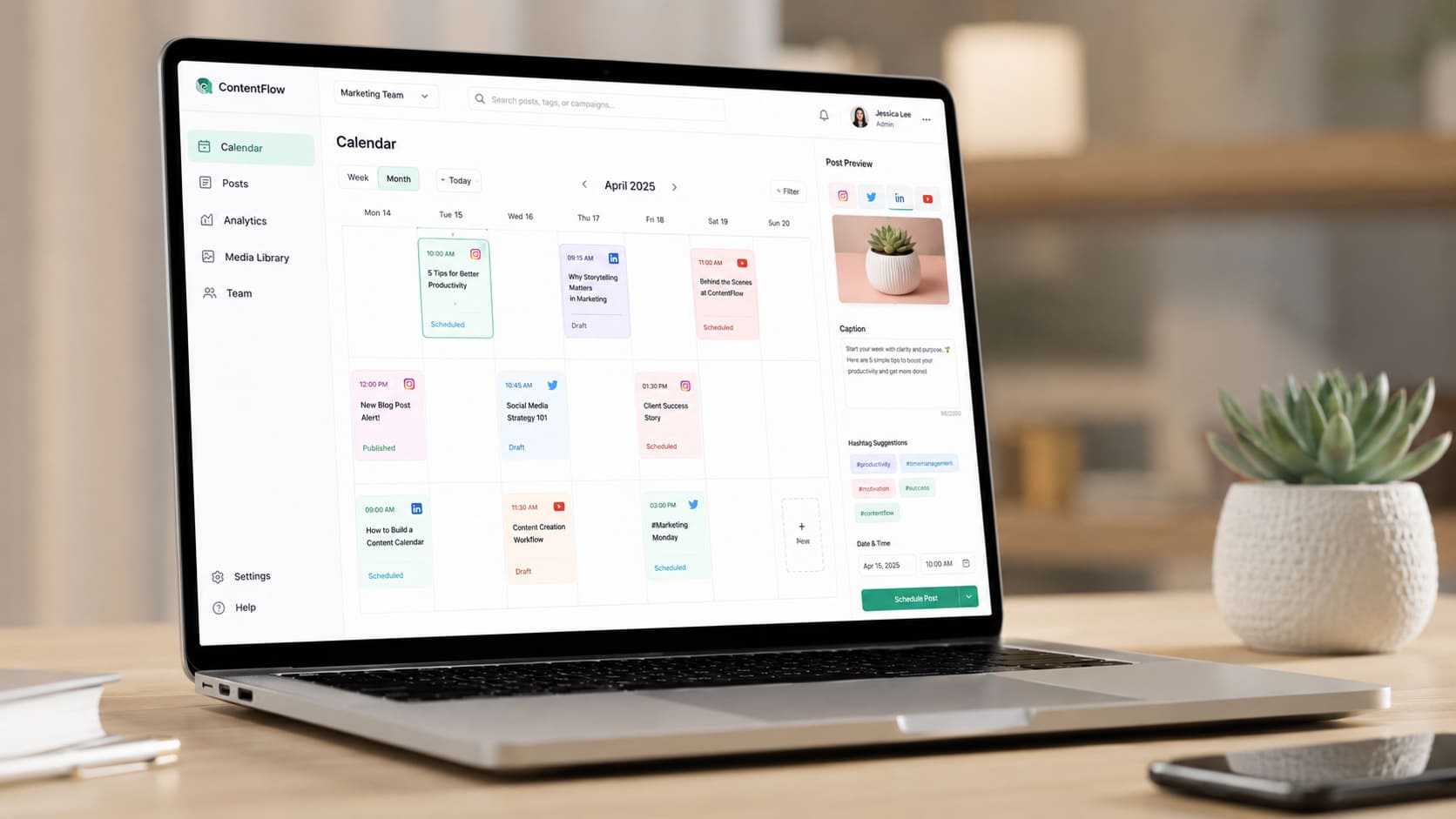
Content planning and scheduling tool for multi-channel editorial workflows.

Dynamic QR platform with configurable auto-refresh and real-time delivery.
Refactoring tangled Node codebases is what we do.
Callback hell and copy-pasted route handlers
Async/await with shared middleware
We refactor route handlers into small async functions, lift cross-cutting concerns into reusable middleware, and add Jest coverage as we go. Years of nested callbacks and duplicated logic become a codebase the next engineer can actually read.
Memory leaks forcing nightly restarts
V8 profiling and heap analysis
We attach the V8 inspector, capture heap snapshots, and find retainers: unbounded caches, listeners that never come off, closures over large payloads, and streams that never close. We fix the source, not the symptom.
CPU work blocking the event loop
Worker threads and background queues
Image processing, PDF generation, and crypto operations get moved off the request thread to worker threads or a BullMQ queue with Redis. The event loop stays free and your p99 latency stops climbing.
API surface leaking internal implementation details
Versioned contracts with clear boundaries
We define explicit request and response shapes, version routes from the start, and enforce error contracts at the boundary. Consumers get a stable API. Internal refactors stop cascading into breaking changes.
No visibility into request latency across services
OpenTelemetry instrumentation from day one
We wire structured logs, distributed traces, and metrics into the first PR. Every request carries a trace ID through your services. You see where latency comes from before it pages someone at 2am.
Deployments that require manual steps to go live
Automated CI/CD with health checks and rollback
We build the pipeline once: lint, test, build, push image, deploy, health check, rollback on failure. A passing PR ships itself. A bad deploy reverts itself. Your on-call engineer stops dreading release day.
Tools we use on Express.js engagements.

Node.js

TypeScript

PostgreSQL

MongoDB

Redis

Docker

AWS

JWT
Express.js builds with production discipline
10+ Years
of Express.js development at reverseBits
We work in Node every day. Architecture, performance, observability, and the boring production details.
01
Versioning, error contracts, pagination, idempotency. We make these decisions early so your API does not become impossible to evolve later.
02
Structured logs, request tracing, metrics, and alerting are part of the first PR, not the post-incident retrospective.
03
Architecture, code, CI/CD pipelines, infrastructure, runbooks. Your in-house team gets a system they can actually run.
Common questions about Express.js projects.
Express stays out of the way. NestJS gives you dependency injection, decorators, and a defined module structure, which is great for large teams who want strict conventions and ramp-up speed. Express is the right call when your team already knows Node, you want full control over the request pipeline, and you do not need every project to look the same. For most API and microservice work, Express keeps the codebase small and the build times fast. We pick the framework against the team and the workload, not the other way around.
We have spent a decade building Node and Express systems for teams who care how their backend ages. Tell us what you are building and we will give you a straight answer on the architecture.